What Causes Hydraulic Cylinder Rod Damage?
Hydraulic cylinder rod damage comes from contamination, corrosion, scoring, seal wear, and misalignment, often worsened by heat, poor lubrication, and skipped maintenance. Catching the cause early is the difference between a quick hydraulic cylinder rod repair and a full cylinder replacement. We explain the warning signs and how to prevent them.
We’ve serviced thousands of hydraulic systems, and rod damage shows up more than almost anything else we see. The pattern is always the same. A small issue goes unnoticed, it compounds, and what started as a scratch becomes a leak, a seal failure, or a cylinder that won’t hold pressure at all.
Understanding what causes that damage is the first step toward stopping it. The second step is knowing when hydraulic cylinder rod repair is the right call and when it isn’t. This post covers both.
What Are the Most Common Causes of Hydraulic Cylinder Rod Damage?
Rod damage has five usual suspects. Know them, and you can usually trace a failure back to one of them within minutes.
Contamination. Dirt, debris, and particulates enter the cylinder during operation or maintenance and get dragged across the rod surface every time it strokes. According to Mac Hydraulics (“6 Sources of Hydraulic Fluid Contamination”), contaminated fluid causes abrasive wear and reduced system efficiency. Tilley Distribution identifies fluid contamination, including air, water, and chemical contamination, as one of the leading causes of hydraulic system failure. This isn’t a minor nuisance. It’s a direct cause of surface wear that compounds with every cycle.
Corrosion. Moisture exposure, saltwater environments, and acidic hydraulic fluids eat away at the rod’s protective plating. Once that plating is compromised, the base metal is exposed, and corrosion spreads fast.
Physical scoring and scratches. Foreign objects or improper handling during installation leave marks on the rod surface. A single deep scratch creates a path for fluid to bypass the seals, and that path only gets wider with use.
Seal wear and degradation. When seals degrade, metal to metal contact becomes possible inside the cylinder. That contact accelerates wear on both the rod and the bore, and it typically shows up as a leak before you ever see the scoring that caused it.
Misalignment and binding. Improper mounting or structural stress on the equipment forces the rod to move at an angle it wasn’t built for. Side loading like this concentrates wear on one side of the rod instead of distributing it evenly, and it shortens the rod’s service life fast.
Why do environmental and operational factors accelerate rod damage?
Causes don’t operate alone. Environment and operation decide how fast those causes turn into failure.
Temperature extremes. Heat and cold both change fluid viscosity and cause metal expansion. A rod that fits its seals perfectly at seventy degrees can bind or leak at the temperature extremes your equipment actually runs in.
Inadequate lubrication. Friction between the rod and seals increases when lubrication breaks down. More friction means more heat, and more heat means faster seal degradation. It’s a cycle that feeds itself.
Excessive load cycles. Every rod is designed for a specific duty cycle. Push it past that limit consistently, and you’re stressing the rod beyond its designed capacity, cycle after cycle, until something gives.
Cavitation and pressure spikes. Sudden pressure changes create microscopic pitting on the rod surface. Pitting looks minor under inspection, but it’s a seal killer. Every pit is a point where a seal can no longer form a clean contact surface.
Poor maintenance practices. Failing to replace hydraulic filters regularly lets contamination build silently. By the time performance drops, the damage to the rod has usually already happened.
Repeated damage in the same cylinder is a signal, not a coincidence. If you’re seeing the same failure twice, the root cause hasn’t been fixed yet. It’s been patched.
How does OSSCO Group approach hydraulic cylinder rod repair?
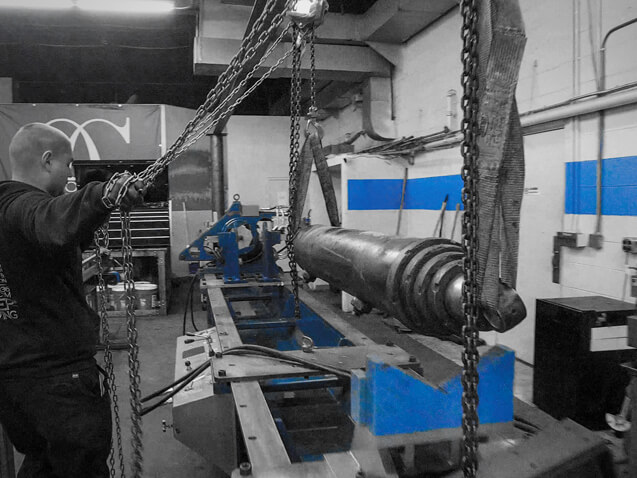
We don’t guess at what’s wrong. Our technicians perform comprehensive inspections first, every time, to identify the actual root cause of the damage rather than just the symptom you called about.
Once we know the cause, we use advanced honing and polishing techniques to restore rod surfaces to spec. We don’t cut corners on replacement components either. We source quality seals and parts built for long term reliability, not short term patches that fail again in six months.
We also recommend preventative maintenance schedules tailored to your specific equipment and environment. A cylinder running in a coastal shipyard needs a different maintenance plan than one running in a dry manufacturing plant, and we build the plan around your actual conditions, not a generic checklist.
If the damage is limited to the rod surface and seals, hydraulic cylinder rod repair gets you back online fast and at a fraction of replacement cost. If the structural integrity of the rod or cylinder body is compromised, replacement is the right call. Guessing wrong here means paying twice, once for the wrong fix, and again for the failure that follows.
What steps actually prevent hydraulic cylinder rod damage?
Prevention isn’t complicated. It’s consistent.
- Implement regular filter changes and fluid analysis to catch contamination before it reaches the rod.
- Protect cylinders from moisture and corrosive environments with proper storage and covers.
- Ensure proper installation, alignment, and load distribution during equipment setup.
- Establish preventative maintenance schedules based on manufacturer recommendations, not guesswork.
- Monitor hydraulic fluid condition and replace it when degradation is detected, before it starts cutting into seal and rod life.
None of these steps are complicated on their own. Skip enough of them, though, and you’re not managing risk anymore. You’re waiting for a failure.
Protect your rods before they fail
Understanding what causes hydraulic cylinder rod damage puts you back in control. Contamination, corrosion, scoring, seal wear, and misalignment all leave warning signs before they cause a full failure. Catch those signs early, and a repair stays a repair instead of becoming an emergency.
At OSSCO Group, we help you minimize downtime and extend the life of your hydraulic systems through expert hydraulic cylinder rod repair and maintenance guidance built around your equipment, not a generic manual. Schedule your inspection today.